
A customer-centric approach to uncover consumer needs

Dr Andries Noeth
(Ph.D. – Research Psychology)

Empower companies to create competitive and sustainable product and service offerings by uncovering the drivers of consumer choices.

What customers value is directly aligned with their needs, preferences, and expectations. To add value to the lives of customers you must understand their needs and desires. This week we will look at various methods companies can use to understand the needs of their customers and how to use this insight to develop product and service offerings that adds great value to customers and improve their quality of life.
  1. Customer centricity as the foundation
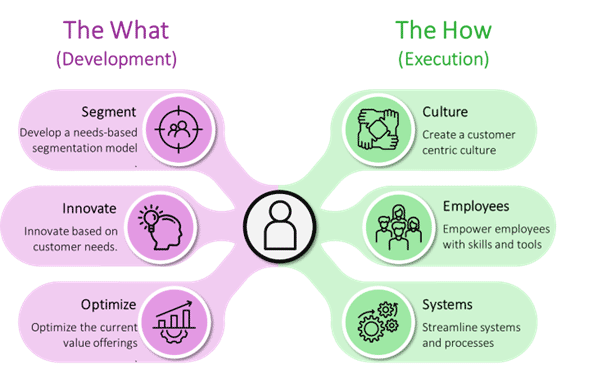
Customer centricity refers to a business approach, philosophy and culture that places the customer at the core of all decision-making processes, strategies, and activities. It involves a deep understanding of customer needs, preferences, and behaviors, with the goal of developing products and services that exceed customer expectations and create delightful experiences. The fundamental principles of customer centricity focus on anticipating customer needs, consistently delivering value and building strong and lasting relationships. Being customer centric relies on two equally important aspects:
  1. What you do
  2. How you do it

CUSTOMER CENTRICITY LEVERS

Being customer centric not only adds value to the lives of customers but also has several advantages for organizations:
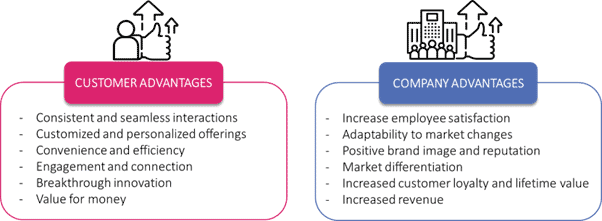
ADVANTAGES OF BEING CUSTOMER CENTRIC Understanding customer needs and more importantly, anticipating their needs before they ask for it, becomes the cornerstone of developing customer-centric value offerings. This proactive improvement strategy surprises and delights customers. Before we look at the different ways that companies can use to uncover the needs of their customers, it’s important to take a moment to appreciate the different types of needs customers have.
  1. Needs hierarchy
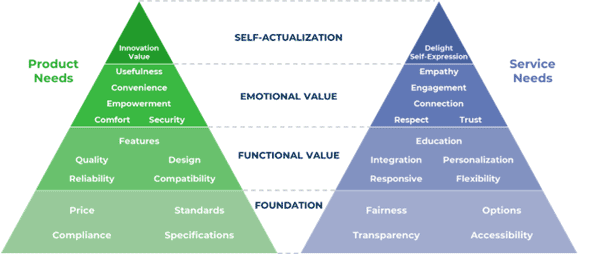
In 1943, psychologist Abraham Maslow published a paper that has become one of the most widely used cognitive frameworks in the field of behavioral science. His hierarchy of needs explains how humans are motivated by certain physiological and psychological needs that progress from basic to complex. The higher up in the pyramid the needs are, the more important they are but also more difficult to attain. Similarly, customers have different types of product and services needs that motivate them to buy a certain product or start using a specific service. These needs start off with some foundational aspects at the bottom of the needs hierarchy and progress in importance to achieve self-actualization.
HIERARCHY OF CUSTOMER NEEDS
  1. Methods to identify customer needs
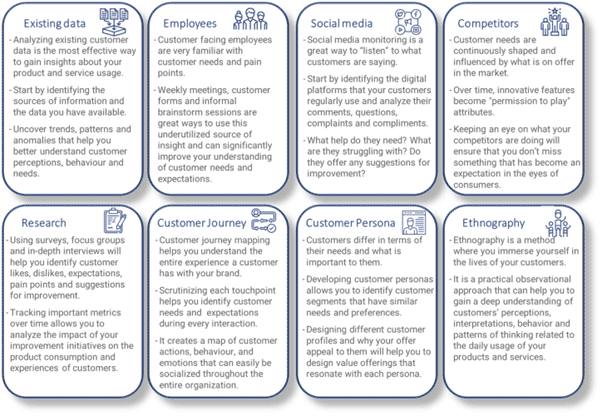
There are several methods companies can use to identify the needs of their customers. Below are eight of the most used methods that can help companies identify the needs of their customers.
METHODS TO IDENTIFY CUSTOMER NEEDS
  1. Creating transformational experiences
Identifying customers’ needs and delivering products and services to meet those needs is a great way to ensure that customers are satisfied and remain loyal. But customers are looking for more; they want transformational experiences. The desire to transform is an innate drive that all of us aspire to. Everyone wants to be different, be better, and achieve more. You need to ask yourself:
  • What is that aspirational identity that our customers are trying to achieve?
  • Who do they want to become and how can we help them achieve that?
Facilitating and enabling your customer’s transformational journey will give new meaning to your business and create customers that will forever be grateful to you for helping them become better versions of themselves. Most of the methods discussed in this article to identify consumer needs focusses on asking customers to tell us what is important to them (stated importance). Unfortunately, this is not always the most successful approach for several reasons:
  • Customers sometimes find it difficult to express what they want and what is important to them.
  • Feedback from customer often focusses on how things have gone wrong (problems and pain points).
  • Customers lack the ability to identify innovative and transformational needs.
  • It does not allow us to uncover the underlying motivations for their preferences and decisions.

Contact Newway insight

Newway Insight can assist any organisation with developing a customer-centric approach to uncover consumer needs.